
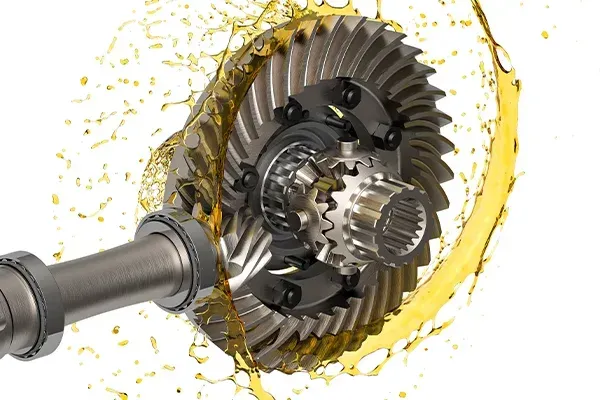

What is Differential Fluid & When Should I Replace It?


  May 30, 2025

While it may not get as much attention as oil changes or brake service, differential fluid plays a vital role in how your vehicle handles, especially when turning, towing, or driving in challenging conditions.

Understanding what differential fluid does and when to replace it can help you avoid unnecessary wear and keep your vehicle running smoothly.

What Does the Differential Do?

To understand the importance of differential fluid, it helps to first understand what the differential itself does. The differential is part of your drivetrain. It takes power from the engine and distributes it to the wheels while allowing them to rotate at different speeds, especially when turning. For example, the outside wheel travels a longer path than the inside wheel in a turn, and the differential allows this difference without causing tire slip or drivetrain strain.

You can compare this to an Olympic running track, as the outside lanes will need to travel a further distance around corners than those running on the inside lane. This difference in distance needs to be accounted for by the differential.

Depending on your vehicle, you may have a front differential, rear differential, or both (in the case of all-wheel-drive and four-wheel-drive systems). Each of these differentials needs proper lubrication to function correctly.

What Is Differential Fluid?

Differential fluid, sometimes called gear oil, is a thick lubricant designed to protect the gears, bearings, and other internal parts inside the differential. It reduces friction, prevents wear, and helps carry heat away from the working components.

This fluid is formulated to handle high pressures and extreme temperatures, especially in vehicles that tow, haul heavy loads, or drive off-road. It’s not the same as motor oil, as differential fluid is much thicker and specifically engineered for the heavy-duty demands of gear systems.

Why Is It Important?

Like any other lubricant, differential fluid breaks down over time. It can become contaminated with metal shavings, moisture, and debris, especially in high-stress driving conditions. As the fluid degrades, it loses its ability to protect the internal components of the differential.

If the fluid isn’t replaced when needed, you run the risk of increased friction, overheating, and even gear failure. The result can be loud whining or grinding noises, poor handling, or in severe cases, complete loss of power to the wheels.

Replacing the fluid at the right interval helps extend the life of the differential, maintains smooth operation, and prevents costly repairs.

When Should Differential Fluid Be Replaced?

There’s no universal mileage for differential fluid replacement because it depends on your vehicle’s make, model, drivetrain type, and how you drive. For most vehicles, the recommended interval is between 30,000 and 60,000 miles. However, if you do a lot of towing, off-roading, or drive in extreme conditions, you may need to change it more frequently.

Always refer to your owner’s manual or consult with a trusted technician to know the right schedule for your specific vehicle. Ignoring this service can lead to premature wear, especially in four-wheel-drive and all-wheel-drive systems where differentials work harder.

Signs Your Differential Fluid Needs Replacing

While some drivers follow the mileage schedule, others may not notice the need for service until symptoms show up. Here are a few signs that your differential fluid may be overdue:

  • Whining or howling noises while turning or accelerating
  • Vibration or resistance when turning corners
  • Burning smell from under the vehicle (overheating fluid)
  • Visible leaks around the differential housing
  • Clunking or grinding from the rear or front axle

If you experience any of these symptoms, it’s a good idea to have your vehicle inspected right away. Catching differential problems early can prevent further damage and avoid costly repairs.

Differential Services in Easton, MA

Replacing differential fluid might not seem urgent, especially if your vehicle is running fine. But neglecting it can lead to internal gear damage, bearing failure, or full differential replacement, all of which can cost hundreds or even thousands of dollars.

If you’re in need of differential service, don’t hesitate to reach out to the friendly team at Shoveltown Auto Service in Easton! Our technicians have extensive experience in providing services on the differentials of various makes and models. Give us a call or schedule online today!

Recent Posts

Loading posts…

Appointments

Schedule an appointment with Shovel Town Auto Service

SHARE THIS

Latest Posts

Person washing a car’s front tire with a hose outdoors
April 23, 2026
Tires are an investment that you likely expect to last for years of regular driving, which is why noticing uneven wear on your tread can be frustrating. Uneven tread wear leads to decreased longevity, causing more frequent replacements despite much of the tire still having adequate tread remaining.  Ensuring that your tires are experiencing even… ...
Close-up of a black camera battery compartment with a gray mechanical component beside it
March 19, 2026
One of the largest byproducts of the combustion process vehicles use to produce power is heat, which can build up in the sensitive metal internals of your motor. This thermal energy must be dealt with, otherwise the surplus of heat will begin to weaken, warp, or crack the most crucial parts of your engine.
Mechanic installing a black car battery in an engine bay, with labels visible.
February 20, 2026
Car batteries are one of those components that generally don’t get much thought unless you’re having issues. So when it’s finally nearing the end of its lifespan, what are the signs you should look out for to avoid being stranded with a dead battery? How Long Do Automotive Batteries Last?
Steam rising from a motorcycle exhaust pipe in a close-up shot, with blurred blue and red lights in the background
January 20, 2026
Our vehicle’s exhaust system plays numerous important roles, from moving exhaust fumes away from the cabin to quieting engine noise to removing harmful pollutants from the engine’s emissions. While a relatively simple system, an issue in just one area of the exhaust can cause a host of potential symptoms and harm.
Blurred car infotainment screen showing a vehicle diagnostic report with text and status icons
December 16, 2025
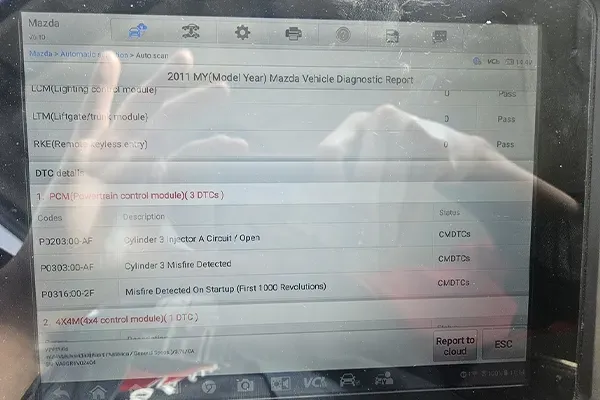
When a vehicle rolls into our shop with a rough idle and a flashing check engine light, the story is usually deeper than what the computer tells us. Recently, we had a perfect example of that, and a great reminder that even brand-new parts aren’t always the root of the problem.  The Initial Symptoms: A… ... The post When a Misfire Isn’t What It Seems: The Real Story Behind Cylinder 3 on This Vehicle appeared first on Shoveltown Auto Service.
Car dashboard fuel gauge near empty, with fuel pump icon and red warning zone.
November 19, 2025
What is a CVT Transmission? Unlike the conventional automatic transmissions that shift between fixed gear ratios, a continuously variable transmission (CVT) instead uses a system of belts or chains and pulleys that can seamlessly adjust to an infinite number of effective gear ratios.

Electric car charging with blue cable plugged into white vehicle at a charging station
November 5, 2025
Electric vehicles (EVs) have become a nationwide favorite among vehicle owners in the past decade. They generate lower energy costs, deliver higher fuel economy, contain advanced battery technology, and offer environmental benefits. These features are huge selling points.
Car undercarriage on a lift in an auto repair shop, showing the rear axle and exhaust.
September 29, 2025
The shocks and struts are some of the critical components in the suspension, absorbing energy from road impact. As these parts take the brunt of the abuse for everyday driving, it’s not uncommon for them to wear down over time and require replacement.
Mechanic working under the hood of a car in a garage
August 29, 2025
The timing system of your powertrain is responsible for ensuring that each step of the combustion cycle occurs at precise intervals to keep the engine operating smoothly and efficiently. If the various components of your engine were an orchestra, the timing system would be the conductor.
Hand adjusting a car climate control knob near the dashboard vents, with a red trim interior.
July 2, 2025
Since the 1950s, air conditioning systems have gone from expensive luxury add-ons to a standard inclusion on nearly every modern vehicle. It’s tough to imagine driving a vehicle throughout the summer without the ability to regulate the interior’s temperature.

Show More